
Springs That Keep Garage Doors Working Safely
Broken Spring Repair in Minneapolis for doors that won't open or suddenly dropped
A garage door that drops rapidly, refuses to lift, or hangs unevenly typically signals a broken torsion or extension spring. Cardinal Garage Doors handles broken spring repair in Minneapolis, addressing the most common cause of sudden door failure. Minnesota's temperature swings—winter cold down to minus twenty and summer heat in the nineties—cause metal springs to expand and contract thousands of times each year, accelerating metal fatigue and eventual breakage.
Garage door springs counterbalance the weight of the door itself, which can exceed two hundred pounds depending on panel material and insulation. When a spring breaks, the opener motor cannot lift the full weight alone, or the door becomes dangerous to operate manually. Broken springs often snap during the coldest part of the year when metal is most brittle, leaving you without access to your vehicle or stored items.
Schedule an on-site inspection to assess spring condition and determine the appropriate replacement specifications.
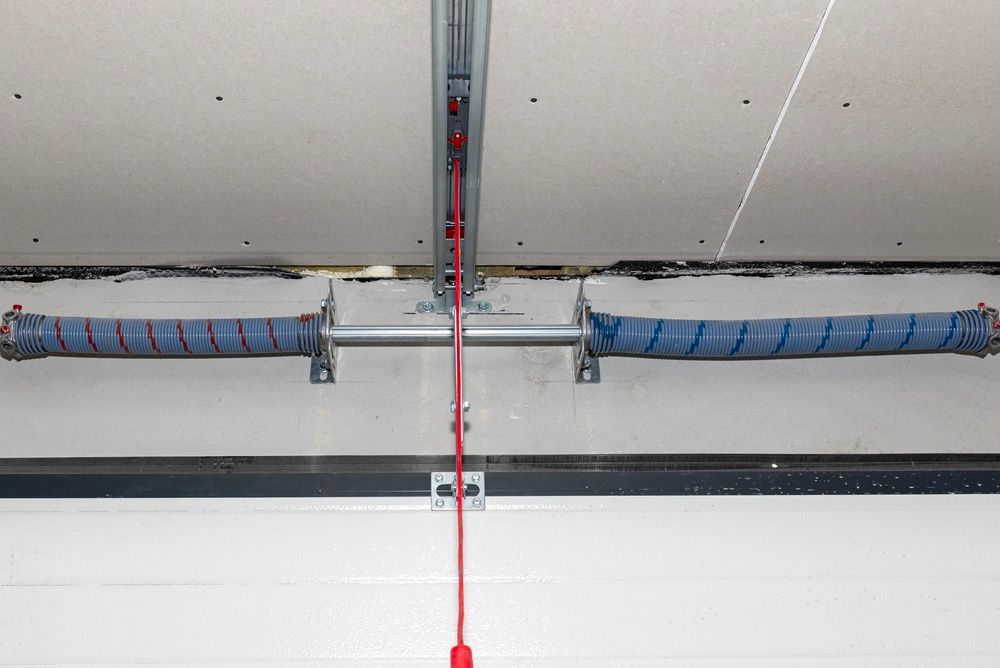
What Changes After Spring Replacement Completes
Spring replacement involves measuring the door weight, identifying the correct spring wire diameter and coil length, and installing springs rated for the specific door configuration. Torsion springs mount on a shaft above the door opening and use wound tension to lift the panels, while extension springs run parallel to the horizontal tracks and stretch to provide lifting force. Both types are calibrated to the door's weight so that lifting requires minimal effort from the opener motor.
Once new springs are installed and properly tensioned, you'll notice the door opens smoothly without jerking or stopping partway, closes at a controlled speed rather than slamming down, and remains stationary when stopped at any height along the track. The opener motor runs quieter because it no longer strains against unbalanced weight, and manual operation—if needed during a power outage—requires far less physical effort than before the repair.
Residential springs are rated by cycle count, typically ranging from ten thousand to fifty thousand cycles depending on wire gauge and quality. Higher-cycle springs use thicker wire that resists fatigue longer, especially in climates with significant temperature variation. Replacing both springs at once is standard practice even if only one broke, since matched springs have undergone similar stress and the second spring is likely near the end of its service life.
What Property Owners Usually Ask
Spring failures raise practical questions about timing, safety, and what to expect during the repair process.
How do I know if the spring is broken or if another component failed?
A broken spring is usually visible—torsion springs will have a gap in the coil where the metal snapped, and extension springs will hang in two pieces. If the door won't lift and you see an intact spring, the issue may involve the opener motor, cable system, or track alignment.
What makes springs break more often in Minneapolis compared to milder climates?
Cold temperatures make spring steel more brittle, and the repeated expansion and contraction from seasonal temperature swings stress the metal with every cycle. A spring that might last twenty years in a stable climate can fail in twelve to fifteen years here due to Minnesota's wide temperature range.
Can I open the door manually after a spring breaks?
You can attempt to lift it manually, but a two-car garage door weighs between one hundred fifty and two hundred fifty pounds without spring assistance. Lifting that weight risks injury and can damage the door panels or bend the track if the door shifts unevenly.
Why do both springs need replacement if only one broke?
Springs installed at the same time undergo identical wear cycles. When one fails, the second has endured the same stress and temperature exposure, making it statistically likely to break within weeks or months. Replacing both saves a second service call and ensures balanced operation.
How long does spring replacement typically take?
Most spring replacements are completed in sixty to ninety minutes, depending on door size and spring configuration. The process includes removing the old springs, measuring and installing new ones, adjusting tension to match door weight, and testing operation through multiple cycles to verify balance.
Cardinal Garage Doors addresses spring failures with replacement springs matched to your door's weight and usage patterns. Arrange a repair appointment to restore safe, balanced door operation before further damage occurs.